Wednesday, January 2, 2019

“I Was Upon An Island From Whence I Could Not Get Off" - The Adventures of Phillip Ashton, Castaway


Admittedly the nerds have spent the past few weeks recovering from a very serious “dispute” with pneumonia. During our illness, we had the opportunity to watch several popular movies from the 1980s through the early 2000s, including the 1986 groundbreaking film The Transformers. However, it was the 2000 drama Cast Away that caught our attention. After watching this movie we started to look for any 18th century accounts of individuals who were stranded on faraway islands and lived to tell their story.

Almost immediately, we stumbled across Phillip Ashton and his 1725 account entitled Ashton's memorial: An history of the strange adventures, and signal deliverances, of Mr. Philip Ashton.

Phillip Ashton was born in Marblehead in 1702. When he was twenty years old, he was employed as a fisherman on the Schooner Milton. According to Ashton, on June 15, 1722, he and five other crewmates were off of Cape Sable, Nova Scotia. At approximately four o’clock in the afternoon, the crew finished their work for the day and anchored at Port Rossaway. Shortly thereafter, a brigantine was observed bearing down on their vessel. At the time, Ashton and his fellow fisherman thought nothing of it and assumed it was another New England ship preparing to drop anchor for the night.

Suddenly, “a Boat from the Brigantine, with Four hands, came along side of us, and the Men Jumpt in upon our Deck, without our suspecting anything but that they were Friends, come on board to visit, or inquire what News; till they drew their Cutlashes and Pistols from under their Clothes, and Cock'd the one and Brandish'd the other, and began to Curse & Swear at us, and demanded a Surrender of our Selves and Vessel to them . . .being in no Capacity to make any Resistance, were necessitated to submit our selves to their will and pleasure.”

It turned out the raiders were under the command of the famed English pirate Edward Low. The entire crew was seized, forcibly transferred over to the brigantine and thrown into the hold for several hours. Afterwards, Ashton was transferred to a captured “Schooner belonging to Mr. Orn of Marblehead, which the Pirates made use of for a sort of a Prison.”


The next day the fisherman and his crewmates were brought back to Low’s brigantine. Once on board, the pirate simply asked Ashton if he was married. When he refused to answer, Low “Cock'd his Pistol, and clapt it to my Head, and cryed out, You D-g! why don't you Answer me? and Swore vehemently, he would shoot me thro' the Head, if I did not tell him immediately, whether I was Married or no . . . I was sufficiently frightned at the fierceness of the Man, and the boldness of his threatning, but rather than lose my Life for so trifling a matter, I e'en ventured at length to tell him, I was not Married.”

In response, Low asked Ashton to join his crew. The fisherman refused, citing obligations to his parents and God. The pirate was obviously not pleased with the response and ordered Ashton to to be hauled below deck and thrown in irons. Over the next week, the physical and verbal abuse continued.

Following Ashton’s capture, Low’s fleet left Cape Sable and traveled towards the Grand Banks, where it seized several Spanish and Portuguese fishing vessels. Afterwards, the pirates patrolled the Scottish coast for potential prizes. Ultimately, Low set his sights on the West Indies and arrived at the Gulf of Honduras the Spring of 1723.

While anchored off the tiny island of Roatan, Ashton begged a ship’s cooper to let him join the expedition to collect fresh water. The cooper and Low reluctantly agreed. Once ashore, Ashton assisted the crew with a variety of tasks. However, when the opportunity presented itself, Ashton “ran as fast as the thickness of the Bushes, and my naked Feet would let me. I bent my Course, not directly from them, but rather up behind them, which I continued till I had got a considerable way into the Woods, & yet not so far from them but that I could hear their talk, when they spake anything loud; and here I lay close in a very great Thicke, being well assured, if they should take the pains to hunt after me never so carefully they would not be able to find me.”

Search parties were sent out to recover Ashton. As he later recalled, “At length they set a hallooing for me, but I was still silent: I could hear them say to one another. The D-g is lost in the Woods, and can't find the way out again; then they hallooed again; and cried, he is run-away and won't come again; the Cooper said, if he had thought I would have served him so, he would not have brought me ashoar. They plainly saw it would be in vain to seek for me in such hideous Wood, and thick Brushes. When they were weary with hallooing, the Cooper at last, to shew his good Will to me, (I can't but Love and Thank him for his Kindness) call'd out, If you don't come away presently, I'll go off and leave you alone … So finding it in vain for them to wait any longer, they put off with their Water, without me; and thus was I left upon a desolate Island destitute of all help.”

Once Low and his fleet left the island, Ashton assessed his situation. “I was upon an Island from whence I could not get off; I knew of no Humane Creature within many scores of Miles of me; I had but a Scanty Cloathing, and no possibility of getting more; I was destitute of all Provision for my Support, and knew not how I should come at any; everything looked with a dismal Face; the sad prospect drew Tears from me in abundance.”

He spent the next sixteen months as a castaway. Because he lacked any weapons to kill animals native to the island, Ashton was forced to survive on coconuts and fruit native to the island. “I had no Knife, or other Instrument of Iron with me, by which to cut up a Tortoise, when I had turned it; or to make Snares or Pitts, with which to entrap, or Bows & Arrows with which to kill any Bird or Beast withal; nor could I by any possible means that I knew of, come at Fire to dress any if I had taken them; tho' I doubt not but some would have gone down Raw if I could have come at it.” 


He also had to share the island with swarms of insects and dangerous predators, including crocodiles. “There are many Serpents upon this, and the Adjacent Islands. There is one sort that is very Large, as big round as a Man's Wast, tho' not above 12 or 14 Feet long. These are called Owlers. They look like old fallen Stocks of Trees covered over with a short Moss, when they lye at their length; but they more usually lye coiled up in a round. The first I saw of these greatly surprised me; for I was very near to it before I discovered it to be a Living Creature, and then it opened it's Mouth wide eno' to have thrown a Hat into it, and blew out its Breath at me. This Serpent is very slow in its motion, and nothing Venemous, as I was afterwards told by a Man, who said he had been once bitten by one of them. are several other smaller Serpents, some of them very Venemous, particularly one that is called a Barber's Pole, being streaked White and Yellow. But I met with no Rattle-Snakes there … The Islands are also greatly infested with vexatious Insects, especially the Musketto, and a sort of small Black Fly, (some|thing like a Gnat) more troublesome than the Musketto; so that if one had never so many of the comforts of Life about him, these Insects would render his Living here very burthen|some to him; unless he retired to a small Key, destitute of Woods and Brush, where the Wind disperses the Vermin. The Sea hereabouts, hath a variety of Fish; such as are good to Eat, I could not come at, and the Sharks, and Alligators or Crocodiles, I did not care to have anything to do with; tho' I was once greatly endangered by a Shark, as I shall tell afterwards.”

Approximately eight months into his plight, Ashton encountered another castaway. As he recalled, “Sometime in November 1723. I espied a small Canoo, com|ing towards me with one Man in it. It did not much surprise me. A friend I could not hope for; and I could not resist, or hardly get out of the way of an Enemy, nor need I fear one. I kept my Seat upon the Edge of the Beech. As he came nearer he discovered me & seemed g’tly surprised. He called to me. I told him whence I was, & that he might safely venture ashoar, for I was alone, & almost Dead. As he came up to me, he stared & look'd wild with surprise; my Garb & Countenance astonished him; he knew not what to make of me; he started back a little, & viewed me more thorowly; but upon recovering of himself, he came forward, & took me by the Hand & told me he was glad to see me. And he was ready as long as he stayed with me, to do any kind offices for me. He proved to be a North-Britain, a Man well in Years, of a Grave and Venerable Aspect, and of a reserved Temper. His Name I never knew, for I had not asked him in the little time he was with me, expecting a longer converse with him; and he never told me it. But he acquainted me that he had lived with the Spaniards 22 Years, and now they threatned to Burn him, I knew not for what Crime: therefore he had fled for Sanctuary to this Place, & had brought his Gun, Amunition, and Dog, with a small quantity of Pork, designing to spend the residue of his Days here, & support himself by Hunting. He seemed very kind & obliging to me, gave me some of his Pork, and assisted me all he could; tho' he conversed little . . . Upon the Third Day after he came to me, he told me, he would go out in his Canoo among the Islands, to kill some Wild Hogs & Deer, and would have had me to go along with him. His Company, the Fire and a little dressed Provision something recruited my Spirits; but yet I was so Weak, and Sore in my Feet, that I could not accompany him in Hunting: So he set out alone, and said he would be with me again in a Day or two. The Sky was Serene and Fair, and there was no prospect of any Danger in his little Voyage among the Islands, when he had come safe in that small at near 12 Leagues.”

Unfortunately for Ashton’s newly found friend, a powerful storm quickly overtook the island. “There arose a most Violent Gust of Wind and Rain, which in all probability overset him; so that I never saw nor heard of him any more. And tho' by this means I was deprived of my Companion, yet it was the Goodness of GOD to me, that I was not well eno' to go with him; for thus I was pre|served from that Destruction which undoubtedly overtook him.”

Nevertheless, the kindness of the mysterious castaway proved beneficial to Ashton, as he left behind “Five Pound of Pork, a Knife, a Bottle of Powder, Tobacco Tongs and Flint, by which means I was in a way to Live better than I had done. For now I could have a Fire, which was very needful for me, the Rainy Months of the Winter; I could cut up some Tortoise when I had turned them, and have a delicate broiled Meal of it: So that by the help of the Fire, and dressed Food.”

Coming soon … how Phillip Ashton escaped from Roatan Island.


Friday, December 28, 2018

"I Acknowledge Myself to Have Been Guilty of a Great Many Crimes" - The Notorious Thief Rachel Wall

While the nerds were recently researching privateer activities in Newburyport and Salem, we came across several secondary references to a female pirate named Rachel Wall. Who was this woman and why couldn’t we locate any first-hand accounts of her misdeeds on the high seas?

Rachel Schmidt was born in 1760 and spent the early years of her life in the frontier town of Carlisle, Pennsylvania. According to Rachel, her parents “instructed me in the fundamental principles of the Christian Religion, and taught me the fear of God.” She also noted that “my father was of a very serious and devout turn of mind, and always made it his constant practice to perform family-prayers in his house every morning and evening; was very careful to call his children and family together every Sabbath-day evening, to hear the holy scriptures, and other pious books read to them each one being obliged, after reading was over, to give an answer to such questions in the Assembly’s Catechism as were proposed to them.”

Unfortunately, a pious, frontier life was not for Rachel. By the time she was a teenager, she had run away from home twice. On the second occasion, she fled to Philadelphia, married a George Wall, and then moved to New York City. After spending three months there, the couple relocated to Boston. 


However, upon arrival, George abandoned Rachel, “leaving me an entire stranger.” Having no means to support herself, she became a servant – a position she liked until George returned one day and “enticed me to leave my service and take to bad company, from which I may date my ruin.”

Soon thereafter, Wall fully committed to a life of crime. As she would later confess, “I acknowledge myself to have been guilty of a great many crimes, such as Sabbath-breaking, stealing, lying . . . . and almost every other sin a person could commit, except murder . . . .In short, the many small crimes I have committed, are too numerous to mention . . . and therefore a particular narrative of them here would serve to extend a work of this kind to too great a length.”

One of Rachel’s ventures included “nocturnal excursions” onto ships moored in Boston Harbor. Apparently, she would silently board the vessels, enter the officers’ quarters, and steal their possessions while they slept. In one such instance, Wall recalled “In one of my nocturnal excursions . . . sometime in the spring of 1787 . . . I happened to go on board a ship, lying at the Long-Wharf, in Boston . . . . On my entering the cabin, the door of which not being fastened, and finding the Captain and Mate asleep in their beds, I hunted about for plunder, and discovered under the Captain’s head, a black silk handkerchief containing upwards of thirty pounds, in gold, crowns, and small change, on which I immediately seized the booty and decamped therewith as quick as possible.”

On another occasion, she “broke into a sloop, on board of which I was acquainted, lying at Doane’s Wharf . . . and finding the Captain and every hand on board asleep . . . I looked round to see what I could help myself to, when I espied a silver watch hanging over the Captain’s head, which I pocketed. I also took a pair of silver buckles out of the Captain’s shoes: I likewise made free with a parcel of small change for pocket-money, to make myself merry among my evil companions, and made my escape without being discovered.”

According to Wall, she would often spend the stolen money “in company as lewd and wicked as myself.”

Wall also participated in house breaks. In 1785, she was captured after breaking into attorney Perez Morton’s home. Following a plea of guilty before the court, she was ordered to pay triple damages of eighteen pounds, receive fifteen lashes, and pay court costs. Because she was unable to pay the fines, Wall was quickly sold into servitude for three years.

The experience did little to deter her illicit conduct. Three years later, in 1788, she was once again caught with two accomplices attempting to break into the house of Lemuel Ludden. Wall pled guilty and was sentenced to be whipped, pay restitution and sit on the gallows for one hour with a noose tied around her neck. When she couldn’t pay the fines, she was once again sold into servitude.

On March 27, 1789, seventeen-year-old Margaret Bender was walking to a friend’s house when she felt someone try to pull the bonnet off her head. The teen resisted and fought back. In response, the assailant punched her in the face and then tried to stuff a kerchief in her mouth to silence her. Two men, Thomas Dawes and Charles Berry, heard the disturbance and rushed to Bender’s aid. While Dawes attended to Bender’s injuries, Berry ran after the attacker and eventually seized Wall. He brought her back to Bender, who identified Rachel as her attacker.

When Wall appeared before the court, she surprisingly pled not guilty. Nine people testified at trial but only Bender could identify Wall as her assailant. Defense attorneys argued that Wall was not holding the bonnet when she was captured and thus, was only guilty of attempted robbery. The jury disagreed and found her guilty of highway robbery, a capital crime. Justice William Cushing sentenced Wall to be hung by the neck until dead.


Of course, these criminal exploits were enough to earn Wall some level of notoriety. But what about the assertion that she was also a pirate? Various historians have claimed that during the American Revolution she either served on a privateer that patrolled the waters between Gloucester, Massachusetts and Portsmouth, New Hampshire or served on a pirate vessel that indiscriminately attacked both American and British supply ships near the Isle of Shoals.

Unfortunately, no evidence has ever been produced to verify the claim that Rachel Wall was either. Her own statements allude to a multitude of crimes she committed, but piracy was not one of them. Furthermore, period newspaper accounts of Wall make no reference to her alleged exploits as a pirate or privateer. Finally, there are no court records or witness statements alluding to Wall being prosecuted for crimes on the high seas.

So where did the claim of piracy come from? It appears that this assertion was nothing more than the product of a late 19th Century fabrication. Unfortunately, historian Edward Rowe Snow picked up on the claim and was one of the first to add piracy to her list of misdeeds. Soon others expanded upon Rachel's exploits and by the late 20th Century, Wall had been elevated in some circles to being the first and only female pirate in New England history.

On the night before her execution, Wall dictated her DYING CONFESSION to her gaolers. In it, she continued to maintain her innocence in the robbery and that the witnesses who testified against her were “certainly mistaken”.

On October 8, 1798, Rachel Wall was hanged, along with two other convicts, on the Boston Common. She was the last woman executed in Massachusetts.


Sunday, December 9, 2018

Think Massachusetts Militiamen Carried Hatchets on April 19, 1775? Think Again ....

On the eve of the American Revolution, the Massachusetts Provincial Congress and its Committee of Safety were scrambling to arm its minute man and militia companies with bayonets. By April 14, 17775, only 10,108 bayonets existed for 21,549 muskets. So how did Massachusetts authorities address this shortage?

Some modern historians, as well as many reenactors, believe minute and militiamen simply armed themselves with hatchets, tomahawks or axes. Unfortunately, existing evidence does not support such a proposition. Instead, it appears that hatchets were seen either as camp tools or as a last choice substitution for bayonets. As a result, the extensive carrying of hatchets by reenactors at living history events may be an over-representation of their intended and actual use on April 19, 1775.


First, a review of Massachusetts militia laws from the 18th Century (1700 - 1775) reveals a single reference to the use of hatchets. Specifically, in 1757, Massachusetts Bay Colony revised its militia laws and started to place an emphasis on men acquiring bayonets. The law does indicate that swords were an acceptable substitute and hatchets were to be treated as a last choice. Specifically, “that any Soldier born on the training Lists in the several Regiments, shall be excluded from any Penalty for not being furnished with Swords, in Case they provide themselves and appear with good Hatchets.”

A review of the resolutions of the Massachusetts Provincial Congress and the Committee of Safety between October 1774 and April 1775 suggests there was no recommendation for hatchets, tomahawks or axes to be treated as combat weapons. Typically, Congress’ recommendations for arms and equipment of minute companies stated “that each of the minute men, not already provided therewith, should be immediately equipped with an effective firearm, bayonet, pouch, knapsack, thirty rounds of cartridges and balls.”  Any reference to hatchets or tomahawks is noticeably absent.

Likewise, a search of the 1774 and 1775 minutes of both the Massachusetts Provincial Congress and the Committee of Safety for various terms synonymous with "hatchets" yielded negative results. For example, a search of the term “tomahawk” produced no results. The term “hatchet” yielded three references, however each was part of correspondence to Native American Tribes. The term “axe” revealed several results, but the item always appeared in conjunction with the terms “shovels”, “spades” and “pick-axes”; which suggests Massachusetts authorities viewed the item as a camp tool rather than a combat weapon.

On the local level, a review of several dozen Massachusetts town orders and resolutions regarding the arms and equipment of its militia and minute companies produced not a single instance of tomahawks or hatchets being ordered as a substitute for bayonets. Similarly, most towns hired local carpenters to modify gun stocks, blacksmiths to make bayonets and edged weapons and saddlers to make cartridge boxes and belting. Surprisingly, there is no known evidence of local tradesmen receiving compensation for the production of hatchets for local minute or militia companies. Finally, a review of the available 1775 returns of arms and equipment for provincial forces does not make any reference to tomahawks or hatchets. For example, A Return of the [Chelmsford] Company of the 7th Regiment of Militia in the County of Middlesex lists canteens, blankets, ramrods, priming wires and brushes and cartridge boxes, but makes no note of hatchets or tomahawks. 


Naturally, some historians have pointed towards the “scalping” incident of a British soldier at the Battle of Concord as evidence that militiamen were armed with hatchets. Unfortunately, there is no evidence that a hatchet or tomahawk was actually used in the incident. In fact, one period descriptions implies the soldier may have been beaten with a blunt instrument and then mutilated with a knife or sword, not a hatchet. As General Gage noted, several of his soldiers in Concord “observed three Soldiers on the Ground one of them scalped, his Head much mangled, and his Ears cut off, tho’ not quite dead; a Sight which struck the Soldiers with horror.”

Of course, the nerds want to be clear that we are not saying tomahawks and hatchets were NOT used by Massachusetts minute and militia companies. A 1776 document purported to be from a Bristol County, Massachusetts militia regiment states "List of Men & accouterments of Each man [illegible words] Regiment in Bristol County [Massachusetts] . . . Men including officers - 678, Firearms - 446, Ramrods - 129, Springs - 9, Worms - 160, Priming wires -193, Brushes - 138, Bayonets - 175, Scabbards - 142, Belts - 181, Cutting swords & hatchets - 255, Cartridge box and powder - 274, Buckshot - 10373, Jackknives - 403, Tow for men - 258 flints for men - 2084, pounds powder - 244 1/2, Bullets - 11934, Knapsack - 365, Blankets - 386, Canteens - 295."

Right out of the gate we should note we do have a concern with this document because no one has seen the original. For the past two decades, only a transcription of this privately owned record exists. 

Nevertheless, assuming that the information is accurate, of the 678 men enlisted in this regiment, 255 were carrying swords or hatchets. Unfortunately, what the breakdown is between the two items is unknown. That said, what is of note is that an almost an equal amount (248 men) carried no edged weapons while an additional 175 carried bayonets.   Thus, in a best case scenario, approximately thirty-six percent of the men in this regiment carried hatchets. However, a more likely scenario is approximately twenty percent of the regiment, or two in every ten men, may have carried a hatchet. 

So where did the idea that minute and militiamen used hatchets extensively as a substitute for bayonets come from? Most likely it came from Galvin’s The Minute Men. In that work, the author does suggest that “many” militiamen utilized hatchets as an edged weapon of choice.   Naturally, many historians and reenactors simply ran with the concept and the idea spread.

Obviously, this issue needs to be examined more closely. That said, living historians who portray militiamen who fought at the Battles of Lexington and Concord may want to rethink whether or not a hatchet is an appropriate addition to their respective kits.

Thursday, December 6, 2018

"Massacred By The Inhabitants There" - The Mysterious Death of Captain Thomas Parsons

Yesterday, a c. 1757 needlework sampler by Sarah Sawyer of Newburyport was posted on a facebook page and quickly caught our attention. However, it wasn’t the sampler itself that peaked our interest but rather the reference to Sarah’s late husband. According to the post, Sawyer “was the second wife of Thomas Parsons . . . They married on July 18, 1762, and resided in Newburyport. Thomas Parsons was a mariner who was thought to have been murdered aboard his ship in February of 1772.”

Naturally, any reference to murder or intrigue is going to inspire the nerds to dig further. Unfortunately, the circumstances surrounding the demise of Captain Parsons and his crew still remains a mystery.

Thomas Parsons was born April 29, 1739 in Newbury, Massachusetts and was the son of a very well respected Congregationalist minister. His first wife, Mary Gibson, died in August, 1761. Less than a year later, in July of 1762 he married Sarah Sawyer. The couple had three daughters, the last of whom was born in 1771.

From what little information we can gather, Captain Parsons commanded a small schooner with a crew of eight men. On February 10, 1772, the vessel departed Newburyport for the West Indies. While off the coast of St. Mary’s, Nova Scotia, the ship was possibly boarded by local mariners.  According to Joshua Coffin’s 19th Century narrative, A Sketch of the History of Newbury, Newburyport, and West Newbury, the crew “were massacred by the inhabitants there, after plundering the vessel, and setting it on fire.”

The incident understandably horrified New Englanders and royal authorities quickly moved in to arrest the perpetrators. Evidence suggests the men responsible went into hiding. While it is unknown what happened to most of the men, at least one, Bezel Bonderot, remained on the lamb for over four years.


In April of 1776, Captain Hector McNeil of Boston somehow encountered Bezel in an unknown port and learned that he was one of the persons responsible for the murder of Parsons and his crew. The ship captain seized Bezel and transported him to New York City for prosecution.

On July 19, 1776, the Newburyport based newspaper Essex Journal and New Hampshire Packet reprinted a New York City account of what happened next: 

“Last Sunday one Bezel Bonderot, a native of Nova Scotia, was brought to this city from Canada, charged with being a principal in the murder of Captain Thomas Parsons and eight other persons, in Nova Scotia, in February, 1772. Soon after this murder was perpetrated, he fled his country and has been wandering from place to place ever since, till last April, when he was providentially detected by Captain Hector McNeil, properly secured and sent forward to receive the just reward of his crime. He was yesterday sent on from this city to Newbury Port, the place where Captain Parsons last lived, for examination and trial.”

Unfortunately, the story ends here.  What became of Bezel after his departure from New York City is unknown. There is no record of him reaching Newburyport or being prosecuted in Essex County for the murder of Thomas Parsons.  Newburyport and Massachusetts records are silent on the matter as well.

Hopefully we’ll be able to get to the bottom of this mystery soon!

Monday, November 26, 2018

"The Process of Mixing Must Be Diligently Attended To" - Four Historic Drink Recipes to Try This Holiday Season

The holidays are right around the corner, which means it's time for Historical Nerdery to once again share its list of recommended historic alcoholic recipes for the Christmas Season!

A word of caution...we are not responsible if your in-laws get out of control, refuse to leave for days on end or become extra “snugly” after consuming these punches.

Enjoy!

Jamaican Punch (17th Century)

1 cup fresh lime juice
2 cups grenadine syrup
2 cups Jamaican white rum
1 cup light rum
2 cups fresh pineapple juice
2 cups fresh orange juice
orange slices for garnish
pineapple slices for garnish

Mix all ingredients together in a pitcher or punch bowl. Chill until serving.


Charleston Light Dragoon Punch (18th Century)

4 quarts of black tea
4 cups sugar
1 quart and 1 cup lemon juice
1 quart dark rum (Jamaican)
4 quarts California Brandy (any non-gourmet brandy)
½ pint peach (or apricot) brandy
Equal parts Club soda

Make the black tea/lemon juice mixture, stirring in sugar when hot. Add the alcohol. Set aside or bottle for later use. In a punch bowl place blocks of ice and garnishes of lemon and orange peels. Pour in equal parts of the tea-brandy-rum mixture with club soda.


Charles Dicken’s Punch (19th Century)

2 cups boiling water
1⁄ 2 cup sugar
2 tablespoons fresh lemon zest
1⁄ 4 cup borage fresh edible flower
2 cups sherry wine
1 cup brandy
4 cups apple cider

Remove water from the boil. Steep the sugar, lemon zest and borage flowers in the hot water for 10 to 15 minutes. Strain and add the sherry, brandy and apple cider. Serve either hot or cold.


Mrs. Beeton’s “Hot Punch” aka Hot Toddy

½ pint rum
½ pint brandy
½ cup sugar
1 large lemon
½ tsp nutmeg
1 pint of boiling water

According to Mrs. Beeton herself, “Rub the sugar over the lemon until it has absorbed all the yellow part of the skin, then put the sugar into a punchbowl; add the lemon juice (free from pips) and mix these two ingredients well together. Pour over them the boiling water, stir well together, add the rum, brandy, and nutmeg; mix thoroughly, and the punch will be ready to serve. It is very important in making punch that all the ingredients are thoroughly incorporated; and to insure success, the process of mixing must be diligently attended to.”


Sunday, November 18, 2018

"Insulted Me On Account Of My Offensive Breath" - The Poet Laureate Jonathan Plummer Jr.

If you’ve ever had the chance to visit Newburyport and take a tour with Untapped History, you will usually hear a story or two about Lord Timothy Dexter, the eccentric millionaire who dominated gossip circles in the late 18th and early 19th centuries. However, very few people know about his poet laureate Jonathan Plummer Jr.

Jonathan Plummer Jr. was born in 1761 Newbury, Massachusetts and was the oldest of eight children. According to historian Roger W. Higgins, Plummer was “sickly through infancy and early childhood was mentally weak and easily imposed upon.” As a teenager, he acquired a “reputation records from for being a strange and wayward boy with a flair for revival meetings.” Even Plummer himself noted “my reading, traveling, and thirst for knowledge, too … began to operate to my disadvantage . . . to make me what they called an odd fellow — that is, different from the young fellows who were not readers . . . I was already so insufferably unfashionable as to begin to talk in young company of religion, virtue, poets, philosophers, lords, generals, statesmen, kings, battles, sieges, &c. &c. . . . this made the young people think that I thought myself better than them, and made them resolve to make me feel the torturing effects of their vindictive vengeance.”

Nevertheless, he was a remarkably intelligent young man who had a photographic memory. As a young teenager, Plummer would often recite poetry in the Newburyport marketplace in exchange for tips. Although Jonathan’s mother was impressed with the entrepreneurial spirit his father was embarrassed by what he perceived as his son’s shortcomings. He forbade any further poetry performances, acquired a wheelbarrow for the boy and forced him to work as a fishmonger. According to Plummer, he was “poorly qualified to endure hardships” and was mercilessly taunted by the other vendors he encountered. Humiliated, the teenager abandoned the job in 1776 and enlisted in a temporary militia company raised to support the Siege of Boston. He garrisoned a fortification in Dorchester for ninety days but saw no action. “At this business we made a pretty lazy appearance. Nothing in it fired us with ambition or captivated our fancy.”

At the end of his enlistment, he returned home. “Not relishing the trade, I returned to my father and resumed the farming business, which though not very agreeable, suited me better than handling leather.”

The following year, Plummer tried to join a Newburyport privateer. According to Plummer “hard usage from my father, the love of Daphne, the want of money and a regard for my country prompted me to go forward.” Plummer asserts he joined the privateer Hero, but deserted the day before the ship left port. 


 The Hero and its crew were lost at sea in August of 1777.


Later that year, Plummer enlisted in a militia regiment raised in response to Burgoyne’s invasion from Canada. As with Dorchester, Plummer saw no combat and was discharged from service in the Fall of 1777.

Upon his return to Newburyport, he became a peddler and sold “spectacles, scissors, thimbles, combs, needles, pins,and verses” to local residents. He often spent his time “trading and chatting with the ladies here and there, being kissed and hugged by some females and, disdained on the account of the lowness of my business by others.”

However, following a very public and cruel practical joke, Plummer closed his peddling business and left Newburyport to become a teacher in Londonderry, New Hampshire. Unfortunately, he lost the job due to an insufficient number of students. He quickly lost other teaching posts for a variety of reasons, including complaints of odd behavior. “Finding that I sung a great number of songs and tunes in my apartment alone, they concluded that I was insane”

He then bounced from odd job to odd job until he was hired as a boot cleaner in a local tavern. Unfortunately, the job was short lived as the tavern keeper informed him one day “we’ve found a better Negroe than you.” 

Plummer then decided he wanted to become a Congregationalist minister. He quickly branded himself the “lay bishop extraordinaire” and tried unsuccessfully to have various rural congregations hire him. Unfortunately, most were either underwhelmed or unimpressed by his ministerial skills. Apparently, Plummer often argued that millions of other planets were inhabited and claimed that God was too busy dealing with alien life than to care about mere Earthlings. Plummer also promoted his belief in the science of dreaming. “I often continued my discourse on dreams after people told me to my face, in plain words, that I was crazy.” As one exasperated Newburyport minister declared from the pulpit upon receiving correspondence from him: “O Lord, have mercy on this over-pompous brother, whose wordy rhetoric has just startled our ears; save us from cant, bombast, and all the wiles of the devil. Amen.”

To his credit, Plummer refused to be deterred and continued to plod ahead. He returned to Newburyport and once again took up a variety of odd jobs, including “farming, repeating select passages from authors, selling holibut, sawing wood, selling books, ballads, and fruit in the streets, serving as a porter and post-boy , filling beds with straw and wheeling them to the owners thereof, collecting rags, &c. &c.” One period account suggests he even peddled pornography to make ends meet.


Plummer eventually found success through the self-publishing of books, broadsides and sermons. His popularity grew even further when he started to release poetry and essays he composed to woo a variety of New England women. One such work, entitled Plumer's Declaration of War with the Fair Ladies of the Five Northern States, swore off young women and argued for the courting of "vigorous and antiquated virgins.”

Of course, despite his literary talents, he found little success in the romance department. It appears this may have been the result of his chronic bad breath. As Plummer recalled “they thought a ballad feller too mean to associate with, and often insulted me on account of my offensive breath, cruelly despisin me because I was unwell.”

By the mid 1790s, Plummer caught the attention of Timothy Dexter, the eccentric Newburyport merchant who made a fortune through imaginative business deals such as exporting mittens, warming-pans, and stray cats to the West Indies. He recognized Plummer’s intelligence and offered to set him up as either a physician or minister. Plummer couldn’t decide and instead accepted the post of Poet Laureate. The merchant provided him with a handsome annual stipend, a black suit adorned with stars and fringe, a large cocked hat, shoes with silver buckles and a gold headed cane.

Plummer’s poetry about Dexter was not necessarily cutting edge and rarely impressed the elite of Newburyport. In 1806, Timothy Dexter passed away and the annual stipend ended. To support himself, Plummer apparently returned to peddling goods in the streets of Newburyport.

Nevertheless, he still managed to enjoy continued attention and was an honored guest among many literary circles. The poet John Greenleaf Whittier recalled “twice a year, usually in the spring and autumn, we were honored with a call from Jonathan Plummer, maker of verses, peddler and poet, physician and parson,—a Yankee troubadour,—first and last minstrel of the valley of the Merrimac, encircled, to my wondering young eyes, with the very nimbus of immortality. He brought with him pins, needles, tape, and cotton-thread for my mother; jack-knives, razors, and soap for my father; and verses of his own composing, coarsely printed and illustrated with rude wood-cuts, for the delectation of the younger branches of the family. No lovesick youth could drown himself, no deserted maiden bewail the moon, no rogue mount the gallows, without fitting memorial in Plummer’s verses. Earthquakes, fires, fevers, and shipwrecks he regarded as personal favors from Providence, furnishing the raw material of song and ballad . . . we listened with infinite satisfaction to his readings of his own verses, or to his ready improvisation upon some domestic incident or topic suggested by his auditors. When once fairly over the difficulties at the outset of a new subject, his rhymes flowed freely . . . He was scrupulously conscientious, devout, inclined to theological disquisitions, and withal mighty in Scripture. He was thoroughly independent; flattered nobody, cared for nobody, trusted nobody. When invited to sit down at our dinner-table, he invariably took the precaution to place his basket of valuables between his legs for safe keeping.”

Plummer eventually launched a New England speaking tour  and combined his assorted talents into a single, dazzling performance. Witnesses described it as a combination of preaching sermons, reciting or singing topical ballads (often made up on the spot) and a show and tell of his basket of sundry goods which often included medicines, toiletries, sewing notions, and his own broadsides about the latest murders and disasters.


Unmarried, Plummer spent his final days living with several of his cousins. He fell into a depression and at least one historian has suggested that the poet made several attempts at self mutilation or suicide between 1816 and 1818. 

Jonathan Plummer Jr. passed away in 1819. 

Following his death, Newburyport poet Henry S. Ellenwood published Elegy and Eulogy, and Epitaph, of That Famous Poet, Mr. Jonathan Plummer. In his introductory comments, Ellenwood noted “it may be proper here to remark, that the character of Jonathan was, as far as I know, irreproachable in every particular. He was most scrupulously conscientious; flattered nobody; cared for nobody; was seldom long in a place; and, with as unaffected an independence as ever was known, despised all the fashions of this world, and minded his own business. I wish it were it my power to say so much in favor of any other person upon earth.”


Sunday, November 4, 2018

"In a Riotous Manner Asaulted in the Kings Highway " - When A Newburyport Mob Turned on Joshua Vickery

Admittedly, we have always been drawn to period accounts of mob violence in Pre-Revolutionary War Boston. Little did we know that forty miles to the north the seaport town of Newburyport was carrying out its own brand of mob justice that rivaled that of Boston or Portsmouth, New Hampshire.

In September of 1768, word reached Newburyport that British troops had been dispatched by His Majesty’s government to Boston. Naturally, the news caused great concern and stress. Worse, rumors began to surface in the town that spies and informants working on behalf of royal custom officials were visiting seaport communities to identify smuggling operations.

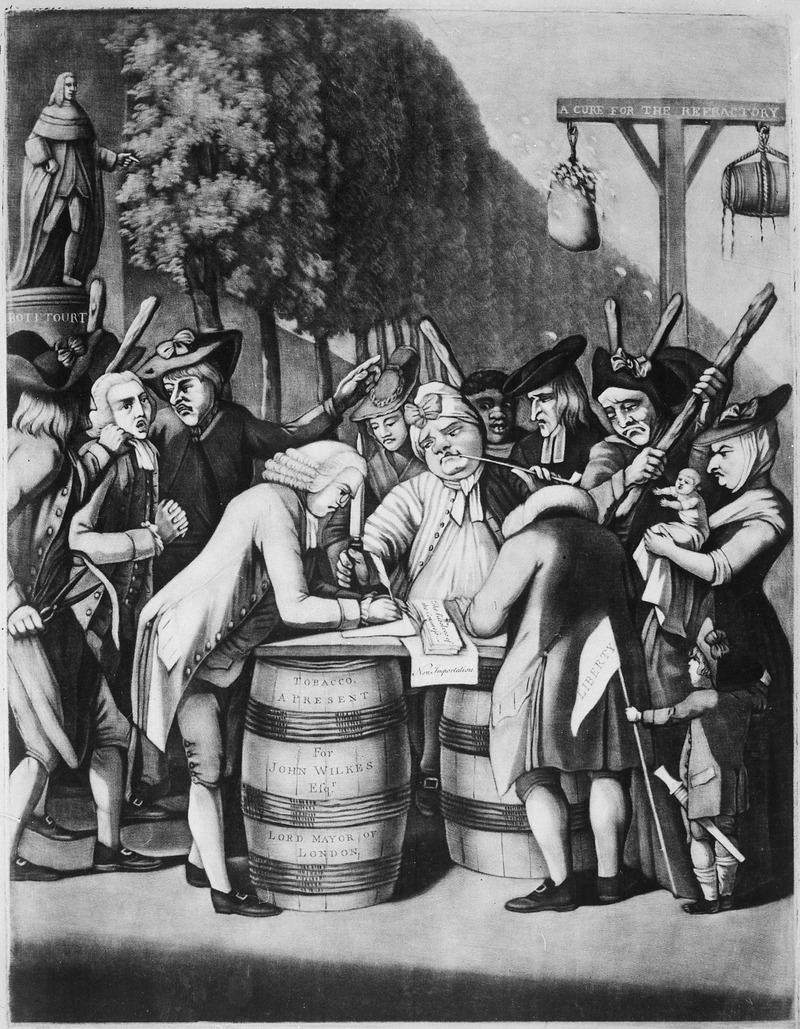
Understandably, coastal towns that were invested in illicit trafficking did not take kindly to those who reported the activities to royal custom officials. For example, in Salem, an informant was discovered and quickly seized by an angry mob. Afterwards, "his Head, Body and Limbs were covered with warm Tar and then a large quantity of Feathers were applied to all Parts, which by closely adhering to the Tar, Exhibited an odd figure, the Drollery of which can easily be imagined." He was set in a cart with the placard "Informer on his breast and back and escorted out of town" by the mob, who warned him of worse treatment if he returned.


In early September, 1768, a Newburyport captain and smuggler named John Emery arrived in Portsmouth, New Hampshire. While on shore he was arrested by custom officers for violation of the royal revenue laws. Word traveled back to Newburyport and Joshua Vickery, a ship’s carpenter, and Francis Magno, a Frenchman, were quickly identified as the informants who disclosed Emery's smuggling ring.

The alleged basis for the accusation was simply that the two men were present in Portsmouth at the time of Captain Emery's arrest.

On September 10, 1768 a large mob armed themselves with clubs and began to search for the two men. According to the September 27th edition of the Essex Gazette, Vickery was quickly found and "in a riotous manner asaulted in the Kings Highway in Newbury-Port, seized and carried by Force to the public stocks in the said Town, where he sat from three to five o'clock, in the afternoon, most of the Time on the sharpest stone that could be found, which put him to extreme Pain, so that he once fainted."

When he regained consciousness, Vickery was "taken out of the Stocks, put into a cart and carried thro' the Town with a Rope about his Neck, his Hands tied behind him until the Dusk of the Evening, during which time he was severely pelted with Eggs, Gravel and Stones, and was much wounded thereby; he was then taken out of the Cart, carried into a dark Ware-houfe, and hand-cuffed with Irons, without Bed or Cloathing, and in a Room where he could not lay strait, but made the Edge of a Tar Pot serve for a Pillow, so that when he arofe the Hair was tore from his Head."

Vickery spent the next day (Sunday) under guard in the warehouse. Several of his friends attempted to visit the carpenter, only to be rebuffed by the mob. Only his wife, "who with Difficulty obtained Liberty to speak to him" was granted access.

On Monday, September 12th, Vickery was dragged out of the warehouse and subjected to intense questioning. Surprisingly, he was able to convince mob leaders "that he never did, directly or indirectly, make or give Information to any Officer of the Customs, nor to any other Person, either against Cap' John Emmery or any other man whomsoever."

Magno did not fare as well. He remained in hiding until Monday morning when he was captured. While in custody he confessed to being an informant for royal custom officials in Newburyport and Portsmouth. He was carried to a horse cart and tossed into it. Although exonerated of his accusations, Vickery was still compelled to lead the cart through the town. Afterwards, Magno "was stripped naked, tarred and then Committed to Gaol for Breach of the Peace."


What became of Magno after his release is unknown but it’s almost certain he fled Newburyport. Vickery and his wife remained in Newburyport until 1783 when they moved to Hampton Falls, New Hampshire. According to early 19th century accounts from the town, "he was a good penman, and reputed to have been a good citizen."